From the Couch: What Clients Are Saying about AI
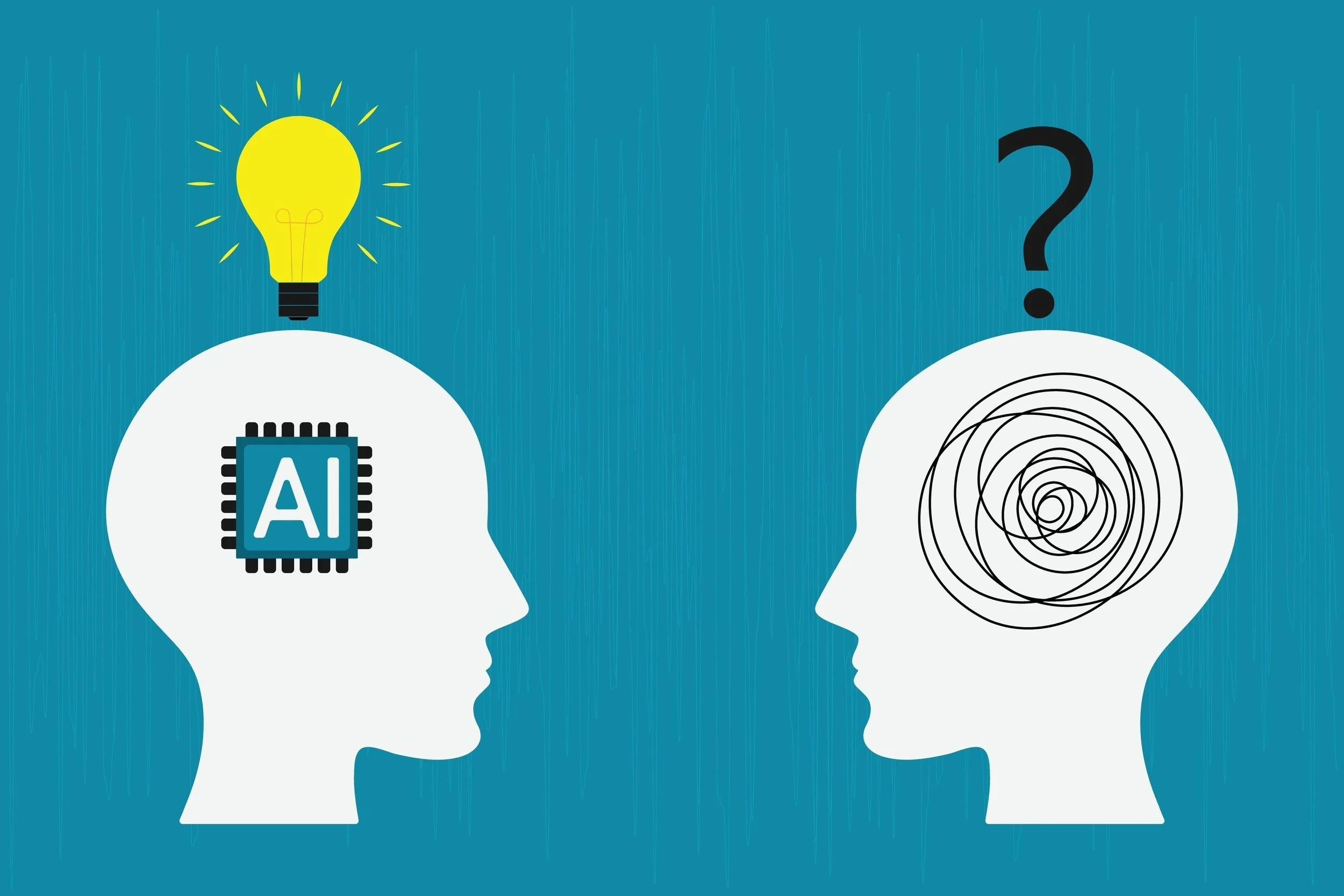
We can’t ignore it: open-AI. It is infiltrating every aspect of life. As an integrative psychiatrist, I have a unique opportunity to be entrusted with the deeper thoughts of my clients.
I honor each interaction, while assessing the subtleties of words falling from the mouths of my clients. When appropriate, I will pause and ask for clarification or ask them to notice what words were just used to describe a certain situation. The goal is to increase conscious choices, authentic interaction, and trust (with others and self).
What people are saying about open-AI from my couch – which comprises all walks of life, from 14y/o – 94y/o - can be summarized by deep concern. These interludes are not prompted but rather are explored when a client spontaneously brings up the topic. I would guesstimate that at least 50-75% of my clients have happened upon this subject due to the uncertainty of how AI will affect their future. And this collective concern is very valid.
At a visceral level, the insidious intrusion of open-AI into the lives of my clients (and the world at large) is noticeable. Often, I will ask “I am wondering if you feel that concern in a particular place in your body”. And the classic response is “kind of everywhere”. The uncertainty of how AI will affect the future is clearly queuing-up the limbic system – at least in my clientele.
The limbic system is the emotional engine of the brain. Simplistically, it houses emotions, memories, and interfaces with “pathways” to the body and the reward pathway. Collectively, these areas are what I call the “back brain” and is unconsciously responding and will rev-up or calm-down activity. The superhighway from the back brain to the “front brain” (prefrontal cortex, a.k.a. executive function center) must be “exercised” to make fully conscious decisions, based on intentionally observing back-brain activity.
Uncertainty is palatable to varying degrees, pending the circumstance and personality-construct of an individual. Some of my clients are more comfortable than others around the unknown future impacts of open-AI than others. But all recognize that drastic change is inevitable, which comes from the mouths of CEOs to retired professionals, working class, and ambitious youth. None are in agreement with the rapid and unbridled development without ethical guardrails in place.
Some are optimistic; but most are discouraged by the projected future from their imagination. We address acceptance of what is not controllable – often a theme from other areas of their lives - but to which we can respond consciously and with gentleness and kindness toward self and others.
The world is on a journey together through very uncertain changes forced upon us all by a small group of people who have decided this course for humanity. Whenever anyone is forced to accept a radical change to their lives, the response is predictably coupled with anger and fear (back to the limbic system). And this is what people are feeling and saying about the future impacts of AI from my couch.