Meditation, Movement, and Mental Health
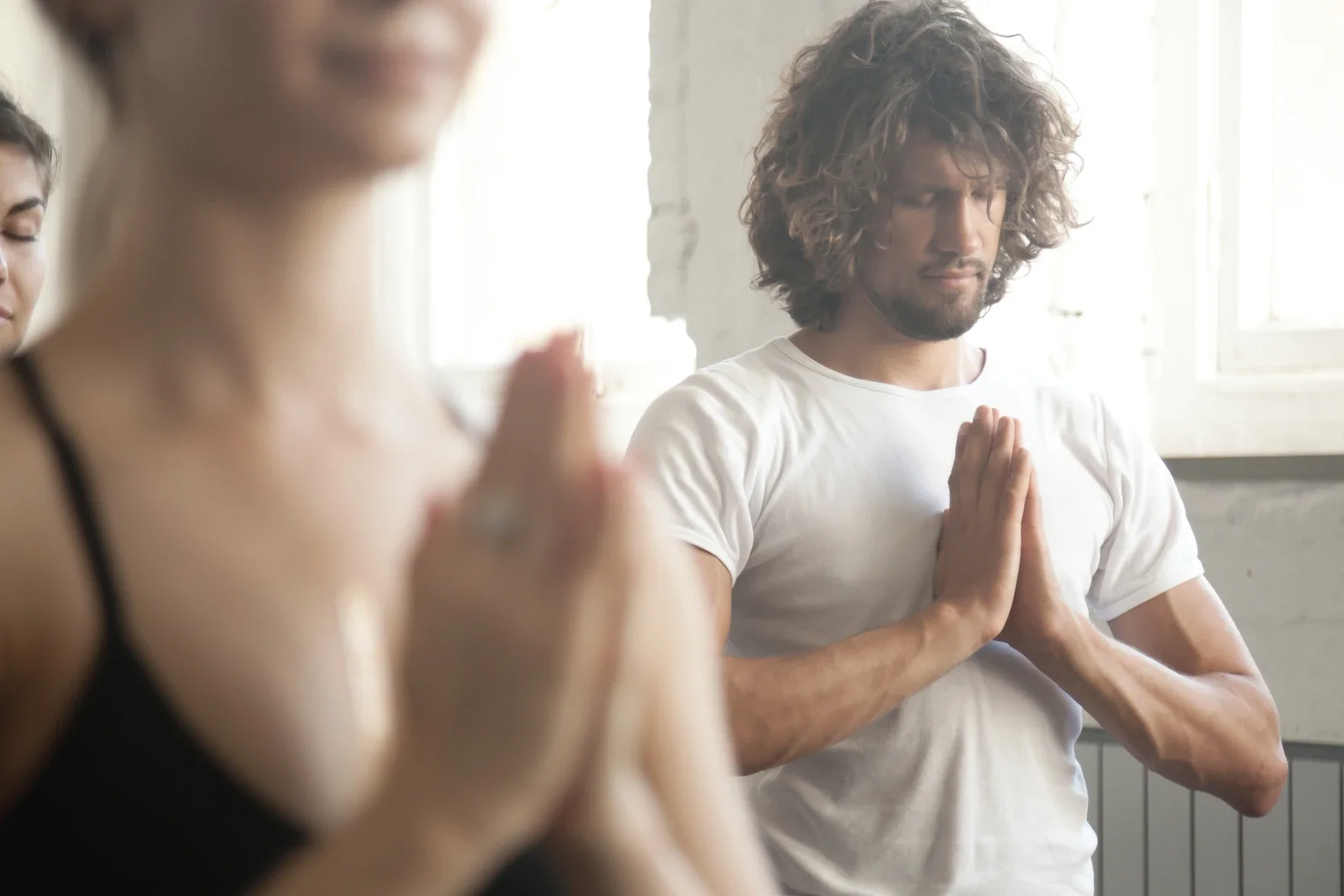
The ancient practices of meditation, Qigong, Tai Chi, and yoga continue to flourish as modalities for healing and maintaining wellness of the mind-body-spirit. But did you know there is a growing body of clinical evidence that yoga and meditation can provide therapeutic help in relieving stress, depression, and anxiety?
Yoga is a practice of mind-body fitness rooted in Indian philosophy that involves a combination of physical activity and a mindful focus on awareness of the self, breath regulation, deep relaxation, and energy. There are many benefits to practicing yoga including stress relief, supporting good health habits, and improvements in mental/emotional health, sleep, and balance.[1] Research also shows that yoga and meditation may improve executive functions, such as reasoning, decision making, memory, learning, reaction time, and accuracy on tests of mental acuity.[2]
We know that exercise is good for our mental well-being. It makes our bodies strong, releases endorphins, and brings more oxygen to our brains. According to Harvard Medical School, yoga causes your brain to develop new connections and changes brain structures to improve cognitive skills like learning and memory. Yoga can also elevate gamma-aminobutyric acid (GABA), a chemical in the brain associated with better mood and reduced anxiety. Interestingly, practicing yoga may have protective benefits that counteract the aging of the brain, too, helping maintain memory and cognitive skills.
Meditation is another ancient practice that has been used to alleviate the effects of stress on the body. Meditation is a process in which you focus your attention inward to induce a state of deep relaxation. It is believed that meditation affects the sympathetic nervous system, which increases heart rate, breathing, and blood pressure during times of stress. There are different types of meditation:
Concentration meditation – the focus of the mind
Heart-centered meditation – quiets the mind and brings focus to the energy center in the middle of the chest
Mindfulness meditation – encourages objective focus on negative thoughts to bring a state of calm
Tai Chi and Qigong – forms of moving meditation that combine exercise with breathing and focus
Transcendental meditation – a repeated mantra to quiet the mind and achieve greater awareness
Walking meditation – a focus on body and mind as you breathe in time with your footsteps
Sara Lazar is a PhD at Harvard who studies the neuroscience of yoga and meditation. She has done significant research into how meditation may physically change many parts of the brain and could theoretically impact cognitive faculties that include, “learning and memory processes, emotion regulation, self-referential processing, and perspective taking.” You can watch a short TED talk by Dr. Lazar as she explains the potential benefits of meditation here.
The beauty of a meditative practice is that it is easy to do anywhere and takes only a few minutes of your day. Experts recommend meditating at the same time every day to create a habit. Within only a week or two of regular meditation, there should be a noticeable change in mood and stress levels. In fact, a 2014 review of studies published in the Journal of the American Medical Association (JAMA) found meditation improved stress-related outcomes in patients with anxiety, depression, and chronic pain.[3]
With so many benefits to yoga and meditation and so little downside, there is no reason not to give them a try. Both practices are excellent add-ons to other treatments, and more research is being done to provide evidence into their effectiveness. If you would like to try yoga and meditative movement, call or text Sovegna at (385) 429-9808.
Sources:
[1] National Institute of Health (NIH) National Center for Complementary and Integrative Health. Yoga: What You Need to Know. https://www.nccih.nih.gov/health/yoga-what-you-need-to-know
[2] Harvard Medical School Harvard Health Publishing. (2021, June 12). Yoga for Better Mental Health. https://www.health.harvard.edu/staying-healthy/yoga-for-better-mental-health
[3] Goyal M, Singh S, Sibinga EMS, et al. Meditation Programs for Psychological Stress and Well-being: A Systematic Review and Meta-analysis. JAMA Intern Med. 2014;174(3):357–368. doi:10.1001/jamainternmed.2013.13018